






Introduction: When “Maybe I Just Need to Leave” Creeps In
If you’ve ever found yourself charting after hours, staring at your schedule for next week, and quietly thinking, “Maybe I just need to leave clinical medicine,” you’re not alone.
That thought doesn’t mean you hate medicine.
It doesn’t mean you failed.
And it definitely doesn’t mean you need to burn everything down tomorrow.
In Episode 358 of The PA Is In, I sat down with Annie Wildermuth, PA-C, leadership consultant, and ICF-certified coach, for a grounded, honest conversation about burnout, career pivots, and how clinicians can make intentional changes without blowing up their lives.
This episode is for the clinician who feels restless, misaligned, or quietly outgrowing their role — but isn’t sure what “next” should look like.
iTunes | Spotify | YouTube
Burnout Isn’t Always About Medicine — It’s About Misalignment
One of the most important truths we unpack in this conversation is this:
burnout is often less about workload and more about misalignment.
Misalignment between:
- your values and your workplace
- what matters to you and how your time is spent
- the life you want and the role you’re in
When values, belonging, and purpose are off, resentment creeps in fast. And that daily drain adds up — even if the job looks “good on paper.”
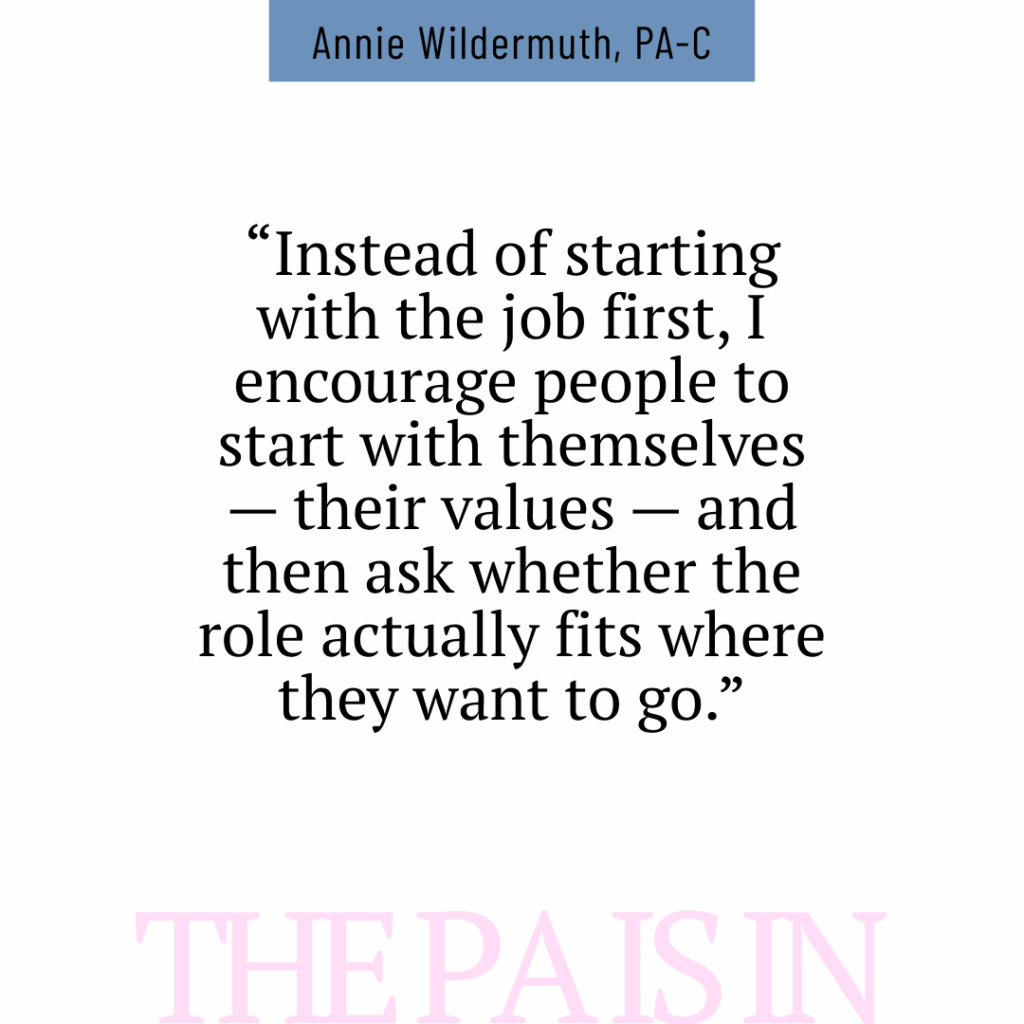
Annie encourages clinicians to flip the traditional approach to career decisions. Instead of starting with job titles or external opportunities, start with yourself. Clarify your values first — then evaluate whether your role actually supports where you want to go.
Is Non-Clinical Work Really the Answer?
When burnout hits, non-clinical roles can look incredibly tempting. More flexibility. Fewer shifts. Less charting. Fewer bodily fluids. Fewer life-or-death moments.
But here’s the honest truth we landed on in this episode:
the grass isn’t automatically greener — it’s just a different lawn with different weeds.
Annie shares candidly about her own journey into non-clinical work and the surprising realization that patient care still mattered deeply to her. While non-clinical roles can be fulfilling when they align with your values, they aren’t a cure-all — especially if you’re running away from burnout instead of toward something meaningful.
Before making a big pivot, it’s worth asking:
Am I moving toward alignment… or just escaping discomfort?
Small Changes Can Create Big Relief
Not every solution requires a massive career overhaul.
One of the most practical parts of this conversation centers on how clinicians can make smaller, sustainable changes within their current roles — especially when large system-level changes feel out of reach.
Annie introduces a powerful framework from Drive by Daniel Pink:
- Autonomy — having control over how and when you work
- Mastery — learning, growing, and developing new skills
- Purpose — feeling connected to why your work matters
Even small shifts in one of these areas can dramatically improve fulfillment. Whether it’s pursuing a new clinical interest, stepping into a leadership initiative, or addressing a gap in patient care you feel passionate about, leaning into meaningful work can reignite energy — even when overall workload stays high.
You Are Capable of Learning Something New
One of the most common fears that surfaces during career transitions is, “What if I can’t learn something new?”
Here’s the reality: clinicians learn hard things all the time. That skill hasn’t gone anywhere.
Whether you’re switching specialties, stepping into leadership, or exploring a new role entirely, there will always be a learning curve. Annie reminds us that discomfort is temporary — and that most new roles include a ramp-up period for a reason.
Career change doesn’t require perfection or certainty. It requires movement, support, and a willingness to take the next manageable step.
Planning Ahead Beats Waiting for Crisis
A recurring theme in this episode is how often clinicians wait until they’re in crisis to think about career strategy. But just like preventative medicine works better than emergency intervention, proactive career reflection makes transitions far less overwhelming.
Annie encourages regular check-ins:
- What’s working right now?
- What’s no longer serving me?
- What do I want work to contribute to my life — not compete with?
It’s okay not to have everything figured out. Careers evolve. Values change. And choosing a new direction doesn’t mean your previous path was wrong — it means you’ve grown.
Permission to Choose Intentionally
This episode is a reminder clinicians need to hear:
You don’t have to be in crisis to make a change.
You don’t need a perfect plan to take a step.
And you’re allowed to design a career that actually fits your life.
If you’ve been feeling stuck, restless, or quietly wondering what’s next, Episode 358 will help you slow down, zoom out, and move forward with intention — instead of panic.
If this conversation resonated with you, consider this your permission slip to start with yourself — and choose your next step on purpose.
Pin For Later